If you run a commercial kitchen, café, food truck, or restaurant, you likely think about food quality, staffing, and customer experience every day.
What you probably don’t think about?
Your grease trap.
And that is exactly why it deserves your attention.
Most business owners do not see the need for a grease trap until there is a plumbing disaster, a foul smell in the dining area, or a visit from the health inspector. By then, the cost is already high.
This article breaks down why grease traps matter, how they work, and why cleaning them is not optional, it is essential.
What Is a Grease Trap?
A grease trap, also known as a grease interceptor, is a plumbing device installed between your kitchen drains and the municipal sewer system.
Its job is simple:
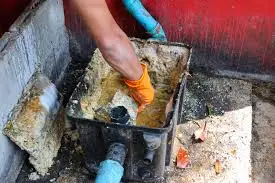
Separate fats, oils, and grease (FOG) from wastewater before it enters the sewer lines. When hot grease goes down the drain, it looks harmless. However, once it cools, it solidifies and sticks to pipes. Over time, this buildup:
- Narrows pipe diameter
- Slows drainage
- Causes blockages
- Leads to sewage backups
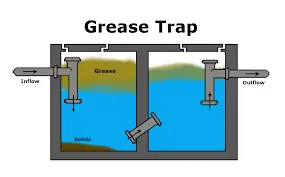
Think of a grease trap as a holding tank with a smart design.
- Wastewater flows in from sinks and dishwashers.
- The water cools inside the trap.
- Grease floats to the top.
- Food solids sink to the bottom.
- Cleaner water exits to the sewer.
Over time, the grease layer thickens.
If it is not removed, it:
- Reduces trap efficiency
- Causes overflow
- Sends grease into sewer lines anyway
Importance of a Grease Trap
Grease buildup is gradual and silent. You do not notice it forming. You only notice the consequences. Moreover, those consequences include:
- Emergency plumbing bills
- Kitchen downtime
- Lost revenue
- Health code violations
- Unpleasant odors that drive customers away
Preventive maintenance always costs less than emergency repairs.
Having a grease trap is not just about avoiding fines.
- Customers notice smells. They notice plumbing issues. Word spreads quickly.
- Overflow and backups create unsafe working conditions.
- Grease damage can extend beyond pipes to pumps and drainage systems.
- FOG pollution harms waterways and wastewater treatment systems.
- Responsible businesses protect their community as well as their bottom line.
Types of Grease Traps
1. Manual or Passive Hydro mechanical
- They are small, usually installed under sinks or in the floor. They use baffles and gravity to cool and separate FOG from water.
- Best suitable for smaller establishments with limited space (cafes, small restaurants).
- Require frequent, often weekly, manual cleaning and pumping.
2. Automatic Grease Removal System
- They are similar to passive, but equipped with electrical and mechanical components that automatically skim, heat, and empty FOG into a container.
- Best suited for busy restaurants requiring minimal, automated maintenance.
- Lower, less frequent maintenance due to automated skimming, though higher initial cost.
3. Gravity Grease Traps
- Made of concrete, fiberglass, or steel, typically installed underground outside the premises. They use, at minimum, two or more chambers for separation, offering high-efficiency removal (up to 90%).
- High-volume, large-scale operations (hotels, hospitals, large restaurants).
- Require professional cleaning and pumping periodically.
How do Grease Traps Work?
Step 1: Wastewater Enters the Trap
Water from sinks, dishwashers, and floor drains flows into the grease trap instead of going directly to the sewer. The trap is designed to slow down the flow allowing allows separation to happen.
Step 2: Separation Begins
Inside the trap, heavy food solids sink to the bottom, grease and oils float to the top and water remains in the middle layer. This creates three distinct layers:
Top Layer → Grease (FOG)
Middle Layer → Water
Bottom Layer → Food solids
The trap’s internal baffles (partitions) help prevent the grease layer from escaping.
Step 3: Cleaner Water Exits
The outlet pipe is positioned below the grease layer and above the solids. Only the relatively cleaner water flows out into the sewer system. The grease and solids remain trapped inside.
What Happens Over Time?
As the kitchen operates daily:
- The grease layer thickens.
- The solids layer builds up.
- The water layer shrinks.
If the trap is not cleaned, eventually:
- Grease begins flowing out with the water.
- The trap loses effectiveness.
- Blockages form downstream.
Grease Trap Cleaning and Maintenance
A grease trap works by separating fats, oils, and grease (FOG) from wastewater. But it does not eliminate grease. It stores it. If not cleaned regularly, the trap reaches capacity — and when that happens, grease begins flowing directly into your plumbing system.
Clean the grease trap when it reaches 25% combined grease and solid accumulation.
For most commercial kitchens, this means:
- Every 1–3 months for moderate operations
- Monthly (or more often) for high-volume kitchens
- Possibly less frequently for very small operations
Proper maintenance involves:
- Schedule routine cleanings before problems emerge
- Train kitchen staff to limit grease going down the drain
- Install the right size trap (not too small)
- Keep maintenance logs for compliance and planning
- Ask service providers for bundled plans or yearly contracts