On Friday evening, Nairobi experienced one of the most devastating flash floods in recent years.
What started as a heavy downpour quickly escalated into a disaster. Within hours, major roads were submerged under water, vehicles were swept away by strong currents, and homes were flooded. Emergency responders spent the night navigating flooded streets searching for survivors.
By the weekend, the scale of the tragedy had become clear.
Across Kenya, at least 42 people lost their lives, with Nairobi recording the highest number of fatalities, about 26 deaths in the capital alone. Authorities reported that many victims drowned after being swept into rivers or trapped inside vehicles, while others died from electrocution when floodwaters reached damaged power lines.
The floods left widespread destruction across Nairobi’s neighborhoods, businesses, and infrastructure. The event once again exposed the city’s vulnerability to heavy rainfall and highlighted the urgent need to address Nairobi’s failing drainage systems.
Why Nairobi Floods
Meteorological data shows that the storm responsible for the flooding was extremely intense. Within just 24 hours, Nairobi received approximately 112 mm of rainfall, exceeding the city’s average rainfall for the entire month of March.
This sudden and intense downpour overwhelmed the city’s drainage system and caused rivers to overflow.
Floodwaters rapidly spread across low-lying neighborhoods and major highways, trapping motorists and residents. Rescue teams from the Kenya Red Cross, police, and the military were deployed overnight to assist stranded residents and recover bodies from flooded areas.
Areas Most Affected by the Floods
Several parts of Nairobi experienced severe flooding during the storm.
Major Roads and Transport Corridors
Traffic across the city was heavily disrupted, particularly along key highways including:
- Uhuru Highway
- Mombasa Road (between South C and Kyumbi)
- Thika Superhighway (Githurai to Kahawa Sukari)
- Jogoo Road
- Enterprise Road
- Lunga Lunga Road
- Lang’ata Road near T-Mall
- Sections of the Central Business District
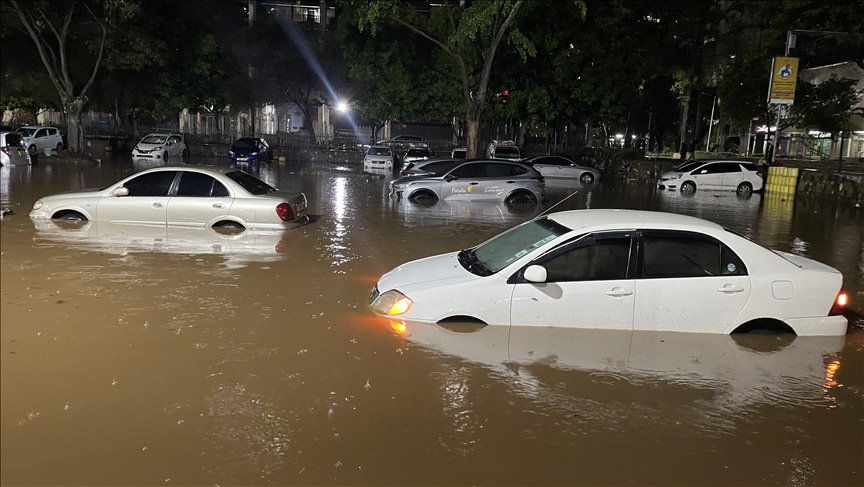
Floodwaters trapped motorists and made many roads completely impassable.
Residential Areas
Flooding also affected several residential neighborhoods, including:
- Westlands
- Dagoretti
- Roysambu
- Embakasi
- South B and South C
- Informal settlements along the Nairobi River such as Mukuru, Korogocho, Kibera, and Mathare
Many of these areas lie in low-lying terrain or near rivers that overflow during heavy rainfall. Thousands of residents were displaced as water entered homes and destroyed property.
Impact of the Floods
One of the most dramatic scenes following the floods was the number of vehicles swept away by fast-moving water.
Authorities reported that more than 172 vehicles were recovered from floodwaters after the storm. Many cars were found submerged on flooded roads or piled together after being pushed by strong currents.
Businesses also suffered major losses. Floodwater entered shops, restaurants, and commercial premises in parts of the Central Business District and industrial areas, damaging stock, equipment, and buildings.
Across the country, flood damage to homes, infrastructure, and businesses is estimated to run into millions of shillings.
Infrastructure Damage
The storm also caused serious damage to critical infrastructure.
- In Eastlands, a major water pipeline along Outer Ring Road was swept away, disrupting water supply to thousands of households.
- Several neighborhoods experienced power outages after floodwaters damaged electrical infrastructure.
- At Jomo Kenyatta International Airport, severe weather disrupted flights and forced some aircraft to be diverted.
Key Reasons Why Nairobi Floods
1. Blocked Drainage Systems
A common sight after rainfall in Nairobi is blocked roadside drains.
Many drainage channels are clogged with:
- Plastic packaging waste
- Soil and silt
- Construction debris
- Household garbage
- Vegetation
These materials obstruct the flow of water. When drains become blocked, rainwater cannot move through the drainage system and instead spreads across roads, homes, and businesses.
2. Rapid Urban Growth
Nairobi has undergone rapid urban expansion over the last two decades.
Large areas that were once open land have been replaced with:
- Apartment buildings
- Shopping malls
- Roads and highways
- Parking lots
While this development has transformed the city, infrastructure improvements have not kept pace.
Hard surfaces such as tarmac, rooftops, pavements, and parking areas prevent water from soaking into the ground. Instead, rainwater runs quickly into drainage systems that were never designed to handle such large volumes.
3. Construction on Riparian Land
Encroachment on natural waterways has also worsened flooding.
Many buildings have been constructed along riverbanks or on flood-prone land that naturally acts as flood storage areas during heavy rainfall.
When these spaces are occupied by development, excess water is forced to find alternative paths often through residential neighborhoods and roads.
4. Aging Drainage Infrastructure
Much of Nairobi’s drainage network was built decades ago when the city was much smaller.
At the time:
- The population was lower
- Fewer buildings existed
- Large areas of land were still permeable
Today, the city has expanded significantly, yet much of the drainage system has remained unchanged. During intense storms, these systems become overwhelmed, causing rivers to overflow and flood nearby settlements.
5. Climate Change
Climate change is also contributing to stronger storms.
Scientists report that rainfall across East Africa is increasingly occurring in shorter but more intense bursts, which increases the risk of flash flooding.
This means Nairobi is receiving larger volumes of water in shorter periods, placing even greater pressure on already strained infrastructure.
Emergency Flood Response Efforts
Following the floods, emergency responders and service providers joined recovery operations across the city.
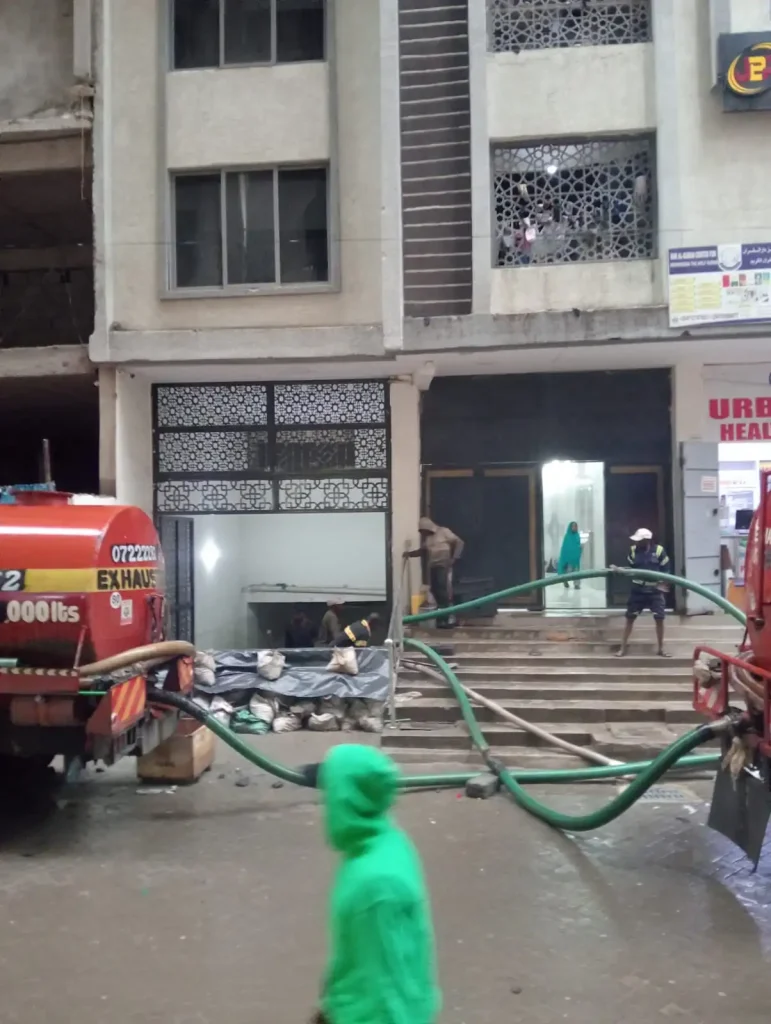
Among them was Omidrop Africa, a Nairobi-based water and sanitation services company that helped clear blocked drainage systems and remove floodwater from critical locations.
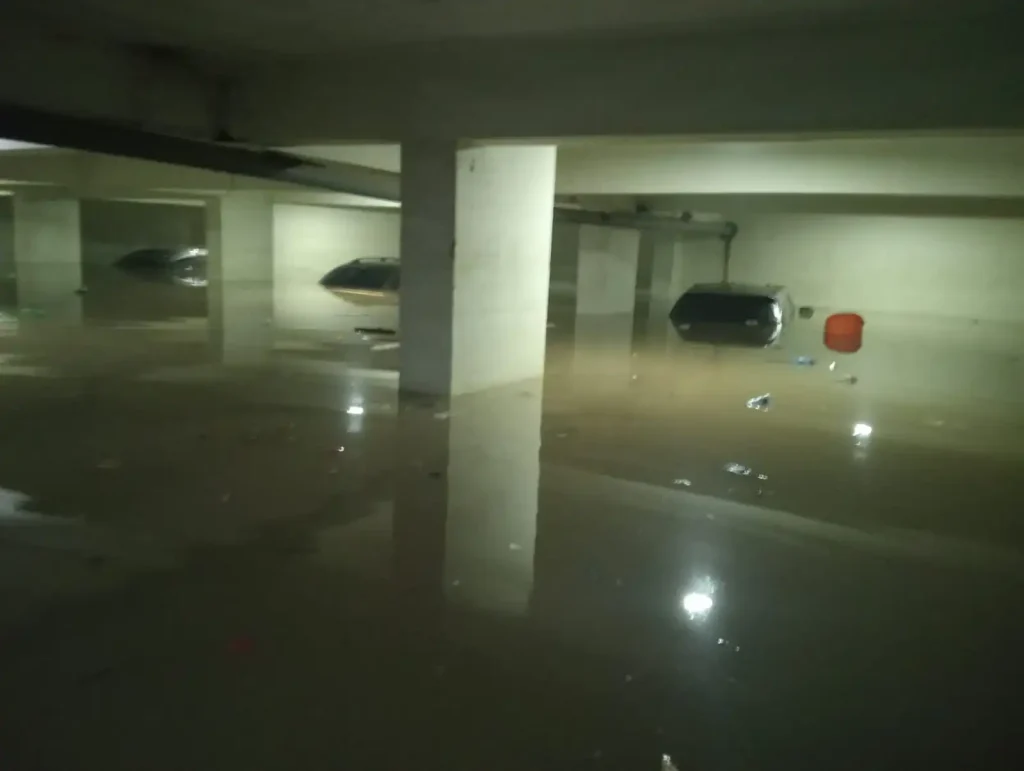
In Eastleigh, heavy flooding submerged several buildings and underground parking areas. Omidrop Africa deployed exhaustion and drainage equipment to pump out large volumes of water from a flooded basement parking facility.
The underground parking area had been completely inundated, leaving three vehicles submerged in floodwater. Using high-capacity suction pumps and drainage equipment, technicians removed the floodwater, allowing access for vehicle recovery and structural inspection.
Omidrop teams also assisted in clearing blocked roadside drainage channels by removing accumulated debris, silt, and waste that had clogged stormwater systems during the storm. These interventions helped restore water flow and reduce prolonged flooding in affected areas.
Solutions Nairobi Needs
Although the flooding situation appears severe, experts agree that it can be addressed through long-term planning and investment.
Expand and Modernize Drainage Infrastructure
Nairobi must upgrade its stormwater infrastructure to match the size of the modern city. Improvements should include:
- Larger drainage tunnels
- Improved road culverts
- Separation of stormwater and sewer systems
- Better flood channels along rivers
Modern drainage systems allow cities to safely move large volumes of stormwater away from roads and homes.
Routine Drain Cleaning
Blocked drainage systems remain one of the easiest problems to fix.
Regular cleaning programs can significantly reduce flooding risks. Drainage channels should be cleared before each rainy season, and stronger waste management policies must prevent garbage from entering stormwater systems.
Protect Rivers and Wetlands
Natural ecosystems such as wetlands act as natural flood buffers.
When protected, these areas absorb excess rainwater and reduce flooding in surrounding neighborhoods. Protecting riparian land and restoring degraded water systems will help Nairobi manage heavy rainfall more effectively.
Invest in Smart Flood Management
Many cities now use technology to manage flooding risks through:
- Flood monitoring sensors
- Real-time rainfall tracking
- Early warning systems
- Smart drainage infrastructure
Such systems help authorities respond quickly to extreme weather events.
Redesign the Storm Drainage System for a Growing City
Nairobi’s drainage system must be redesigned to match the realities of rapid urban development.
The city has seen a sharp increase in high-rise residential and commercial developments in areas such as Kilimani, Westlands, Kileleshwa, Roysambu, and Embakasi.
High-rise buildings generate significantly higher stormwater runoff due to large rooftops, paved parking areas, and surrounding concrete surfaces. These surfaces prevent water from infiltrating into the soil and instead channel it rapidly into drainage systems.
Many existing storm drains were designed decades ago for low-density developments. Today they are often undersized and unable to accommodate modern runoff volumes.
Modern drainage design should therefore include:
- Larger stormwater drains and culverts
- Hydraulic modeling during building approvals
- On-site stormwater management systems
- Retention and detention systems for temporary water storage
- Green infrastructure such as permeable pavements, bioswales, and urban wetlands
Civic Education on Waste Management
Infrastructure improvements alone cannot solve Nairobi’s flooding problem. Public behavior also plays a major role.
Improper waste disposal is a leading cause of blocked drainage systems. Plastic waste, food containers, construction debris, and household garbage are often dumped into drains, rivers, and open channels.
During heavy rains, these materials are carried into stormwater systems where they accumulate and block water flow.
Public education is therefore essential. Awareness campaigns should focus on:
- Proper waste disposal practices
- Environmental and safety risks of dumping waste into drains
- The connection between blocked drains and flooding
- Community participation in maintaining clean drainage systems
When citizens understand that improper waste disposal can contribute to flooding in their own neighborhoods, communities are more likely to take responsibility for protecting drainage infrastructure.
Conclusion
Rainfall will always be part of Nairobi’s climate.
However, disasters like the recent floods do not have to be inevitable. With improved infrastructure, responsible urban planning, better waste management, and stronger environmental protection, the city can significantly reduce flood risks.
The tragedy of the recent floods should serve as both a warning and an opportunity.
If Nairobi learns from this event and invests in long-term solutions, future rainy seasons may bring relief instead of devastation.